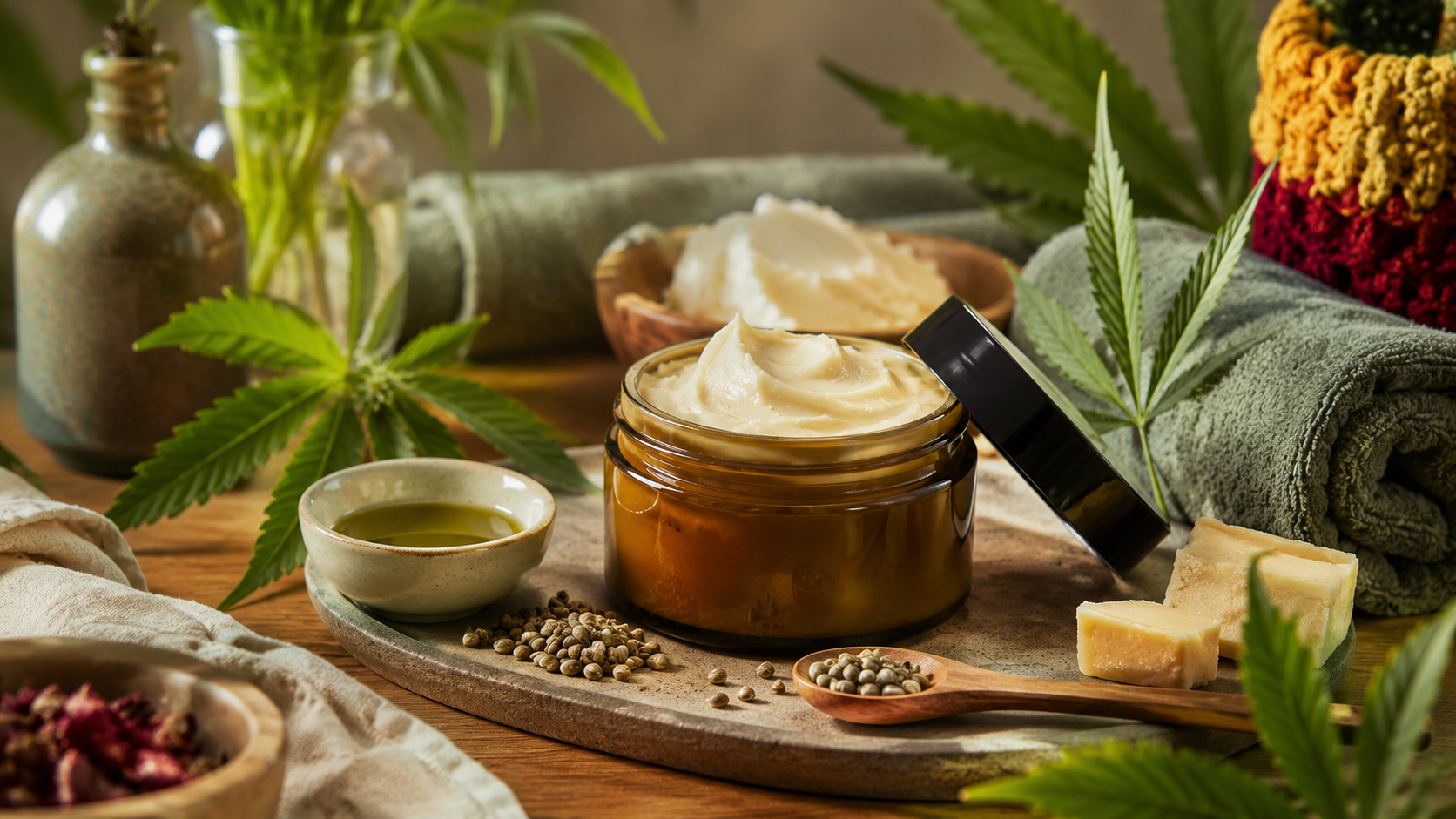
I have been complaining about misleading “natural” labels for a long time.
This product is one of the reasons why.
Back in 2003, I was introduced to a hemp body butter made by a tiny, one-man company.
And when I say tiny, I mean it.
This was not a giant cosmetics brand trying to manufacture an “artisan” story.
It was one person making a product.
You could tell.
Open the container and the first thing that hit you was the smell of the actual ingredients.
Not perfume trying to imitate cocoa.
Not a fragrance engineered to make the product smell “natural.”
You could smell the raw oils and butters combining into something completely unique.
It was earthy.
Rich.
A little wild.
The kind of aroma that comes from ingredients that still smell like where they came from.
I have never found anything that quite replicates it.
And the most important part was simple:
What the label said was in the container was actually what was in the container.
Then the company changed
In 2013, the company was sold.
The name stayed.
The packaging stayed familiar.
And the promise on the front still said essentially the same thing:
“100% natural hemp.”
But over time, the ingredient list started telling a different story.
One ingredient changed.
Then another.
The formula became more complicated.
The front kept selling the memory of the original product while the back slowly became something else.
That bothered me more than if they had simply launched a completely different body butter.
Because I already knew what the product used to be.
I remembered opening that old container and immediately smelling the raw materials.
I remembered a time when the ingredient list and the marketing were saying the same thing.
Once you have experienced that, it is difficult not to notice when the two start drifting apart.
It became another version of the turn-the-package-around test we keep coming back to with VitalLeaves.
The front makes a promise.
The ingredients either support it or they don’t.
“Natural” became part of the costume
This is where the wellness and personal-care industries sometimes lose me.
A company can keep all of the visual language of a natural product.
Earth tones.
Leaves.
Words like PURE, NATURAL, HEMP, BOTANICAL.
Maybe there is even a little picture of the plant somewhere.
Then you read the ingredients and start wondering whether the people designing the front and the people making the product are working in the same building.
That does not mean every formulated ingredient is bad.
It does not mean a product becomes inferior the moment a chemist gets involved.
And it definitely does not mean an unfamiliar chemical name is automatically dangerous.
That kind of fear-based marketing is another form of nonsense.
My issue is much simpler:
Does the product match the story being told about it?
If it is a highly formulated cosmetic product, fine.
Tell me that.
If it uses fragrance, say so.
If preservatives are necessary to keep the finished product safe and stable, there is nothing shameful about explaining them.
What irritates me is using the reputation of a simple, ingredient-driven product while quietly moving further and further away from the thing people originally trusted.
That old body butter stayed in my head
I never forgot the original.
Especially the smell.
Anyone who has worked with minimally processed cocoa butter, shea butter and natural oils knows what I mean.
The ingredients have personalities.
Raw cocoa butter smells like cocoa.
Unrefined shea has its own unmistakable aroma.
Plant oils bring their own scent, color and texture.
When you combine them, the finished product smells like the ingredients interacting with each other.
It does not smell like somebody typed “natural body butter fragrance #14” into an order form.
That distinction matters to me.
And eventually the obvious question became:
Why keep complaining about what happened to that product when we have the knowledge to make our own?
That is where the VitalLeaves hemp body butter begins.
The answer was already in the family
This is another place where Taylor’s Things keeps circling back to the same theme.
The knowledge was already around us.
There is body-butter-making experience in the family.
The ingredients are familiar.
The process is familiar.
The idea of taking oils and butters and turning them into something useful for everyday skin care is not new.
So instead of trying to reverse-engineer somebody else’s modern formula, we are starting from the other direction.
What made the original kind of body butter good in the first place?
Real butters.
Real oils.
A texture created by the ingredients themselves.
An aroma that comes primarily from what is actually in the jar.
And a label that does not need to perform gymnastics to make the product sound closer to nature than it really is.
That is the standard.
Texture tells you a lot
Body butter is not supposed to feel exactly like lotion.
That is part of its appeal.
A good butter has substance.
It may be firm when you first touch it.
Then body heat begins to soften it.
It melts as you work it between your hands or onto the skin.
That change in texture is part of the experience.
And the choice of ingredients matters enormously.
Cocoa butter behaves differently from shea butter.
Different oils change glide.
Ratios change firmness.
Temperature changes texture.
How the product is cooled changes texture.
Whipping changes texture.
Even the room it is sitting in can change how firm it feels.
That is why body butter is not simply a list of fashionable ingredients thrown into a bowl.
The formula matters.
The process matters.
Cocoa butter and shea butter deserve their own versions
We are developing the VitalLeaves body butter around two distinct versions.
One centered around cocoa butter.
One centered around shea butter.
Not “flavors.”
This is body care, not dessert.
The distinction matters because the base butter changes the character of the product.
Cocoa butter brings its own firmness and natural aroma.
Shea has a different feel, a different melt and a very different natural personality.
We are not trying to make them indistinguishable.
That would defeat the purpose.
The ingredients are allowed to be themselves.
That idea sounds almost radical in an industry where products are often deodorized, recolored, fragranced and processed until the original materials barely announce their presence.
VitalLeaves takes the opposite approach.
If cocoa butter smells like cocoa butter, that is not a problem we need to fix.
And then there is hemp
The word hemp has become one of those words companies like putting in large letters.
Sometimes it tells you something useful.
Sometimes it tells you almost nothing.
“Hemp” can refer to different plant-derived ingredients, and the word by itself does not explain what role that ingredient plays in a finished cosmetic.
So the VitalLeaves approach is the same as everywhere else:
Say what is actually in the product.
The exact ingredient belongs in the ingredient list.
Its purpose belongs in the story.
And we are not relying on the word HEMP as a shortcut that allows the customer to imagine whatever benefits they want.
The ingredient earns its place by what it contributes to the formula.
The turn-the-package-around test applies here too
This body butter may be the clearest example yet of why that phrase keeps coming back.
Imagine seeing:
HEMP BODY BUTTER
on the front.
Then you turn it around.
What do you expect to find?
Probably hemp.
Probably some actual butter.
Probably oils.
Something reasonably connected to the product you thought you picked up.
That expectation is not unreasonable.
The VitalLeaves standard is that turning the package around makes the product more understandable, not more confusing.
We are not afraid of the ingredient panel.
We are proud of it.
If something needs to be there, it has a reason to be there.
If we cannot explain why an ingredient belongs in the jar, that becomes a question for the formulation process—not something to hide behind a green label.
“All natural” is not the goal
This might sound strange after everything I just wrote.
But I am not interested in building VitalLeaves around yelling:
ALL NATURAL!
That phrase is part of what created the frustration in the first place.
The goal is honesty.
Good ingredients.
Thoughtful formulation.
Transparency.
A product that matches its description.
If the finished body butter is simple enough that the ingredient list looks refreshingly straightforward, great.
Let the customer discover that when they turn the container around.
We do not need to shout at them.
I would rather somebody read the ingredients and think:
“Okay. This makes sense.”
That is a much stronger endorsement than another badge on the front.
The aroma is part of the test for me
I keep coming back to that first body butter from 2003.
The scent of those raw ingredients stayed with me for more than twenty years.
That tells you something.
Not because fragrance determines whether a skincare product works.
It doesn’t.
But because that aroma represented authenticity to me.
You were smelling what was actually inside the container.
So when we work on the VitalLeaves formula, one of the things I care about is whether the finished product still lets the ingredients speak.
I am not trying to reproduce another company’s exact scent.
That moment is gone.
Their formula belonged to them.
What I am trying to recover is the principle behind the experience:
Open the jar.
Smell the ingredients.
Use the product.
Turn the jar around.
And have all four experiences tell the same story.
Family knowledge turns the complaint into something useful
Complaining about bad labels is easy.
I have done plenty of it.
Building the alternative is more interesting.
And that is where the family connection makes this product especially meaningful.
Knowledge that already existed around us becomes something tangible.
A formula gets refined.
We learn how the ingredients behave together.
We work through texture.
We work through consistency.
We make sure a jar sitting for a while still behaves like the product we intended to make.
Then the final ingredient list gets printed on a real container.
At that point, this stops being:
“Somebody ought to make body butter the way they used to.”
It becomes:
“We are.”
That is one of my favorite things about Taylor’s Things.
Frustration often leads to an opportunity.
VitalLeaves does not need to recreate 2003
There is an important distinction here.
I am not trying to resurrect somebody else’s company.
And I am not trying to pretend the world did not change after 2003.
We have better access to ingredient information now.
Better manufacturing knowledge.
Better packaging.
Better ways to document batches.
Better ways to communicate directly with customers.
We are using those advantages.
The lesson I am carrying forward from that original body butter is not:
“Everything was better twenty years ago.”
The lesson is:
“The label and the product used to agree.”
That is worth keeping.
Modern does not have to mean less authentic.
Scaling does not have to mean slowly replacing the thing that made the product special.
Professional packaging does not require pretending the ingredients are something they are not.
We can move forward without leaving the original principle behind.
This is what the VitalLeaves version represents
The body butter connects almost every part of the VitalLeaves philosophy.
Family knowledge.
Natural ingredients with real character.
Modern product development.
Transparent labeling.
A healthy suspicion of marketing language that outruns the ingredient list.
And a willingness to make the alternative instead of simply complaining about what disappeared.
It also connects directly back to Taylor’s Things.
We keep encountering things we believe can be done differently.
Sometimes the answer comes from Jamaica.
Sometimes it comes from family.
Sometimes it comes from something we remember being better.
Then we ask the same question:
What can we make from what we already know?
In this case, the answer is hemp body butter.
A product inspired by something I first opened more than twenty years ago.
Refined through the knowledge available to us now.
And built around one standard that has become increasingly important across everything VitalLeaves does:
The front of the package and the back of the package are telling the same story.
Leave a Reply