There is a particular kind of creativity you see everywhere in Jamaica.
You work with what you have.
You make something.
You put your own spin on it.
You give it a name everybody is going to remember.
Then you share it.
Sometimes it is food.
Sometimes bush medicine.
Sometimes it is a coconut candy called Bust-A-Jaw.
Sometimes it is yarn.
That same instinct sits underneath the Jamaican crochet collection at Taylor’s Things.
Handmade means somebody actually made it
The word “handmade” gets used so casually that it can start sounding like a style instead of a process.
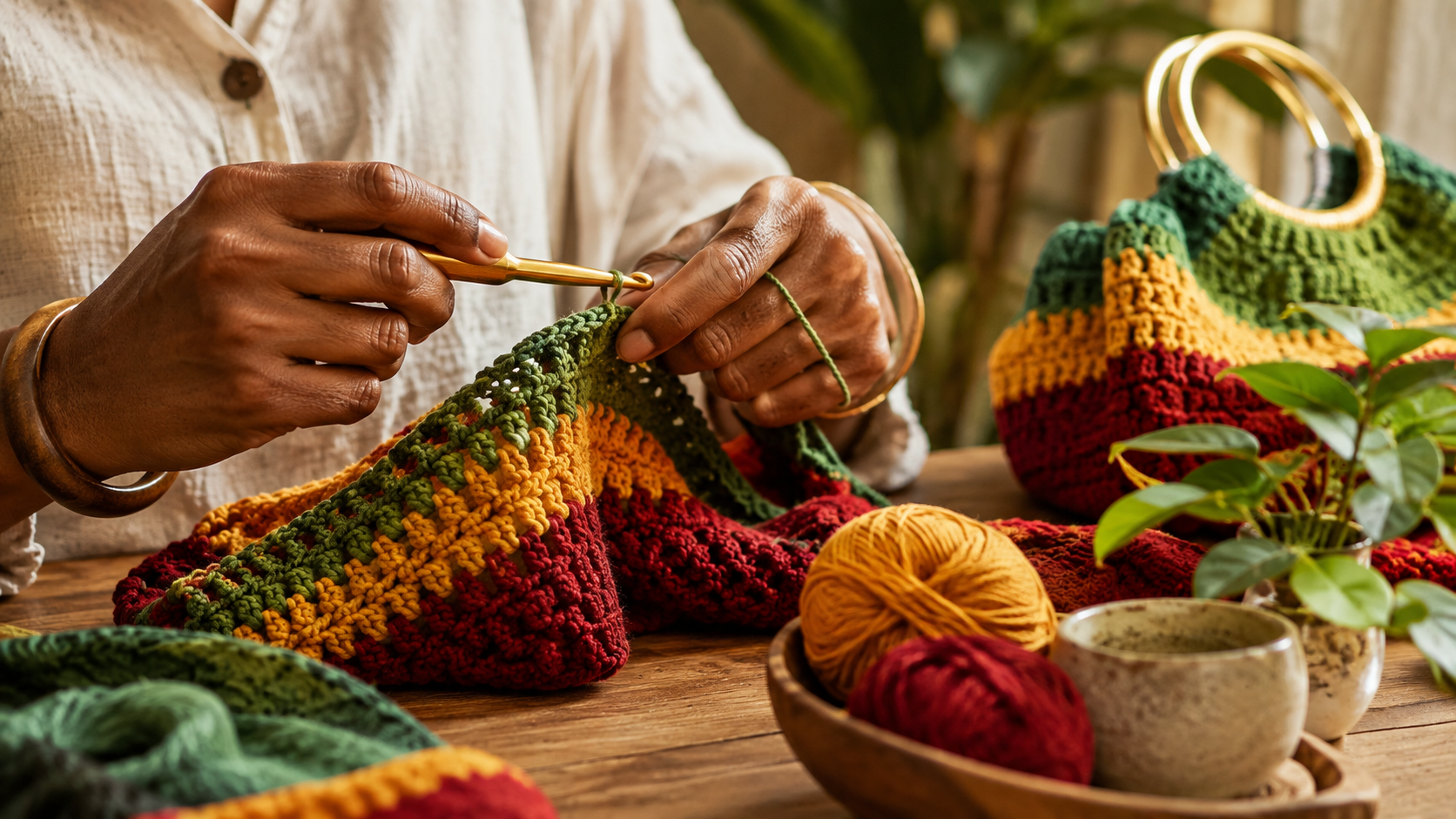
With these pieces, somebody actually sits down with yarn and a crochet hook and builds the item one stitch at a time.
The maker decides what color comes next.
Where the motif sits.
How wide the brim becomes.
How the crown closes.
How long a strap hangs.
How an apparel piece takes shape.
Those decisions stay visible in the finished work.
Variation is not a factory defect
Mass production is built around making one item look like the next.
Handmade work carries more personality.
Stitch tension moves a little.
Color placement changes.
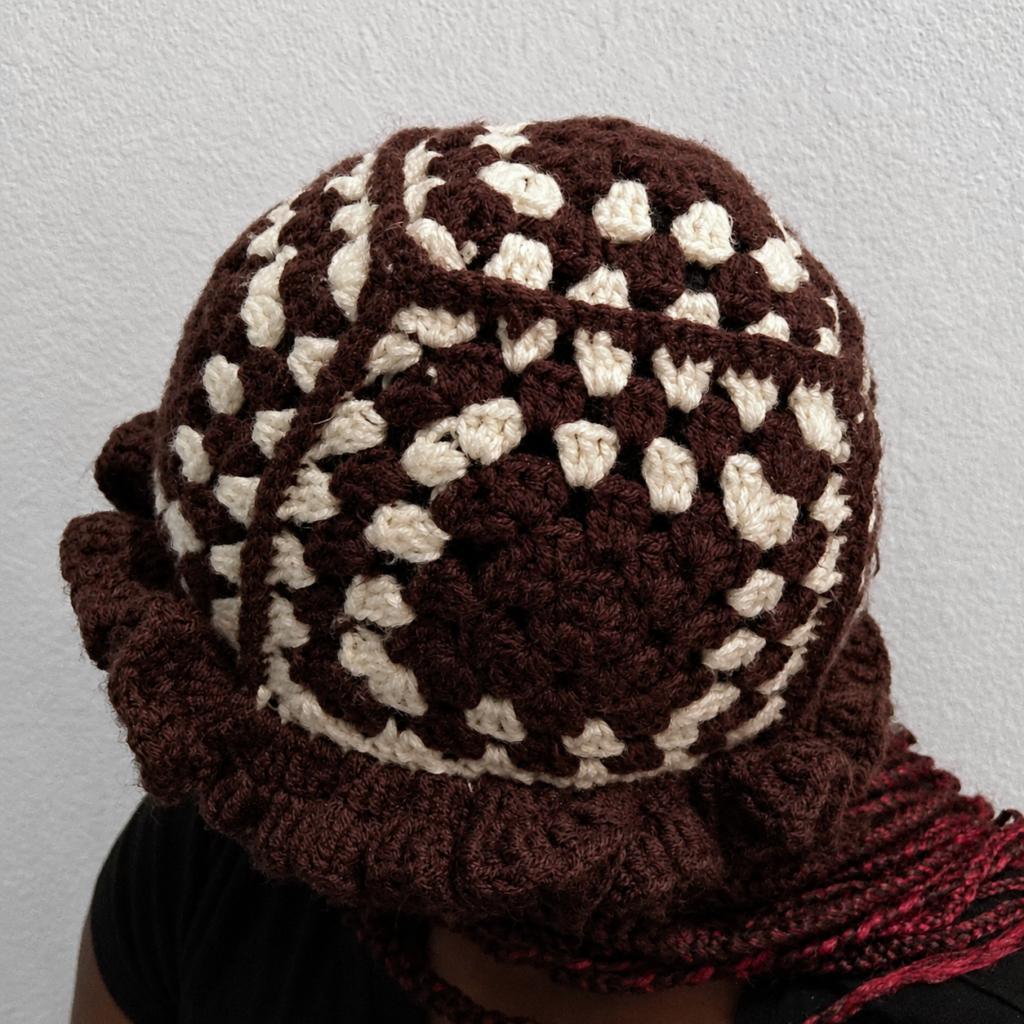
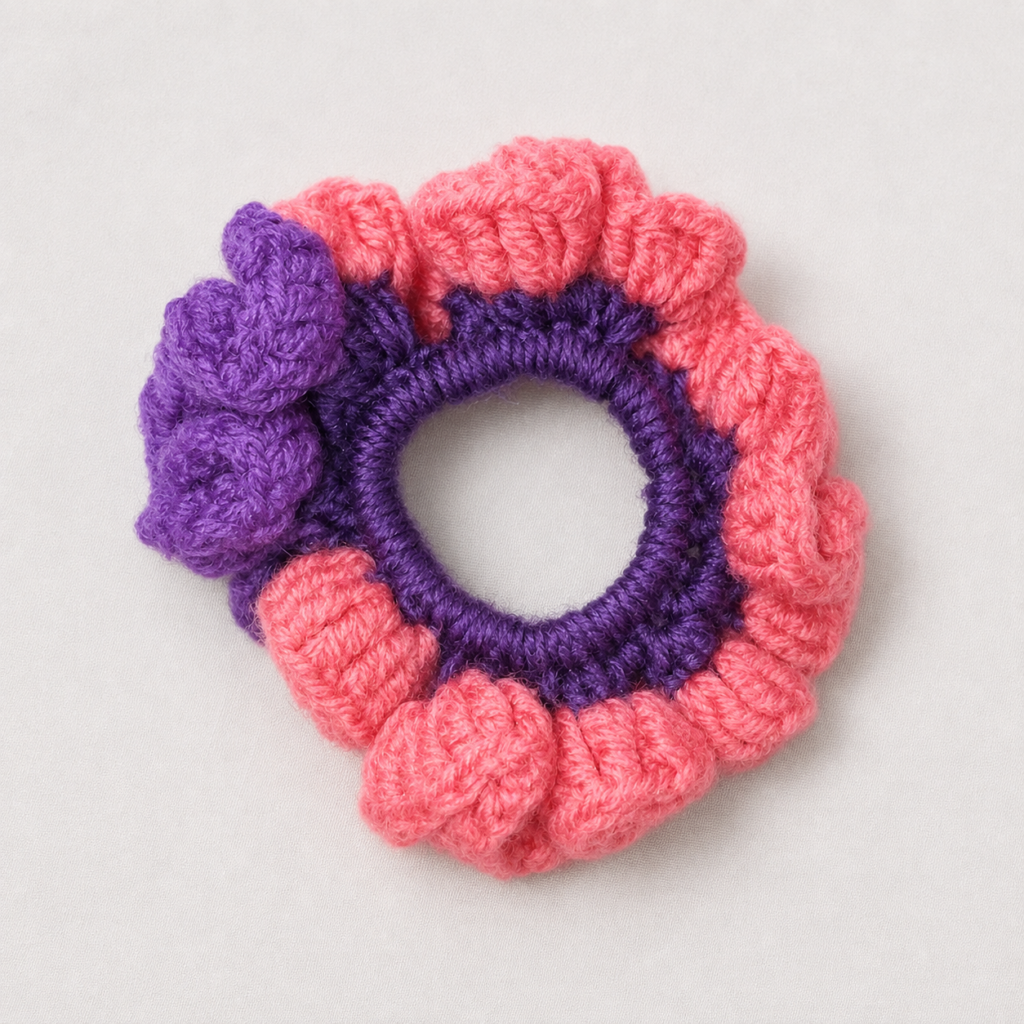
A ruffle develops its own shape.
A motif sits slightly differently.
That does not mean every variation is automatically good craftsmanship. Finishing still matters.
But the goal is not to erase every sign that a human being made the piece.
That would defeat the point.
One of one changes how we sell it
When we say a piece is one of one, we mean it.
We do not photograph one sample and pull a vaguely similar item from a shelf after the order comes in.
Each piece is measured individually.
Each piece is photographed individually.
Each listing describes the actual item.
The exact piece shown is the exact piece you receive.
That changes the shopping experience because the customer is not choosing a generic style.
They are choosing a specific object made by a specific person.
The collection does not have one Jamaican look
Look across the Taylor’s Things crochet collection and the colors are all over the place.
There are ruffled hats.
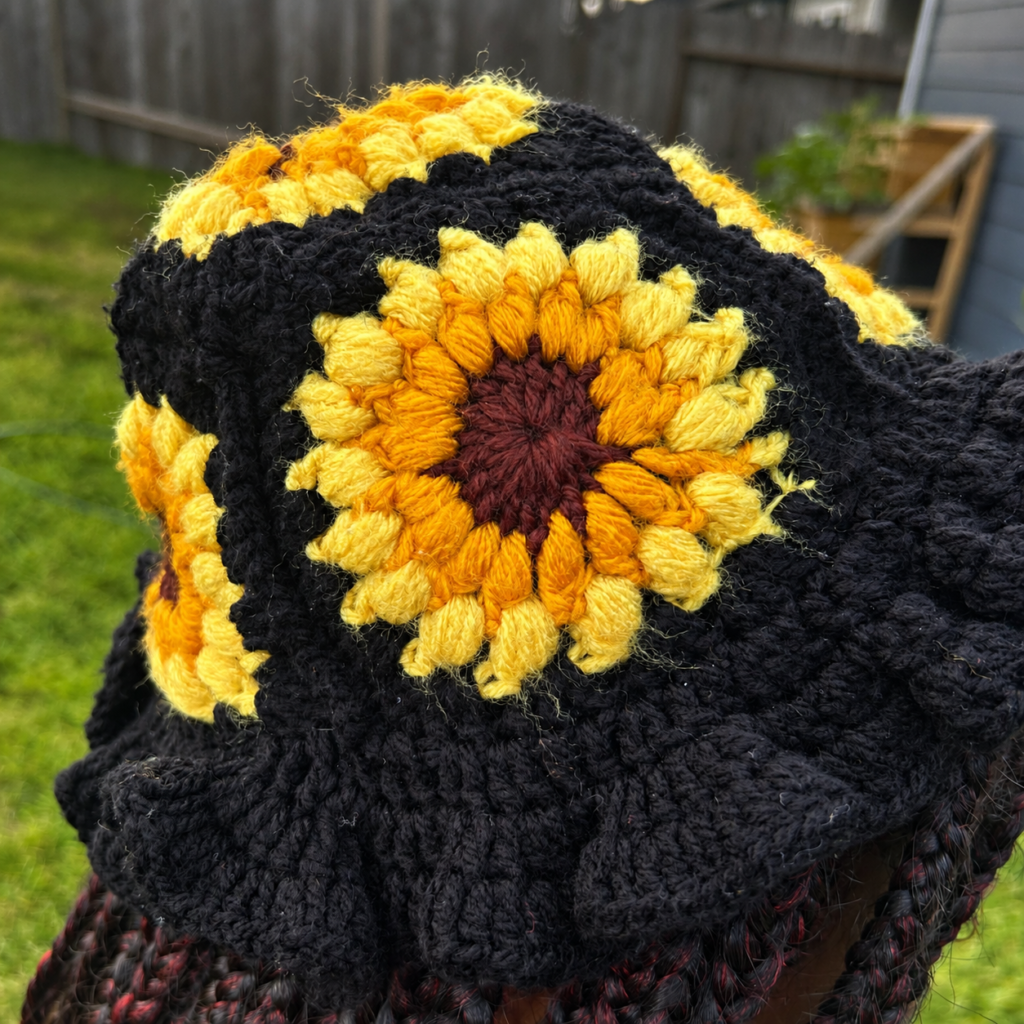
Black sunflower motifs.
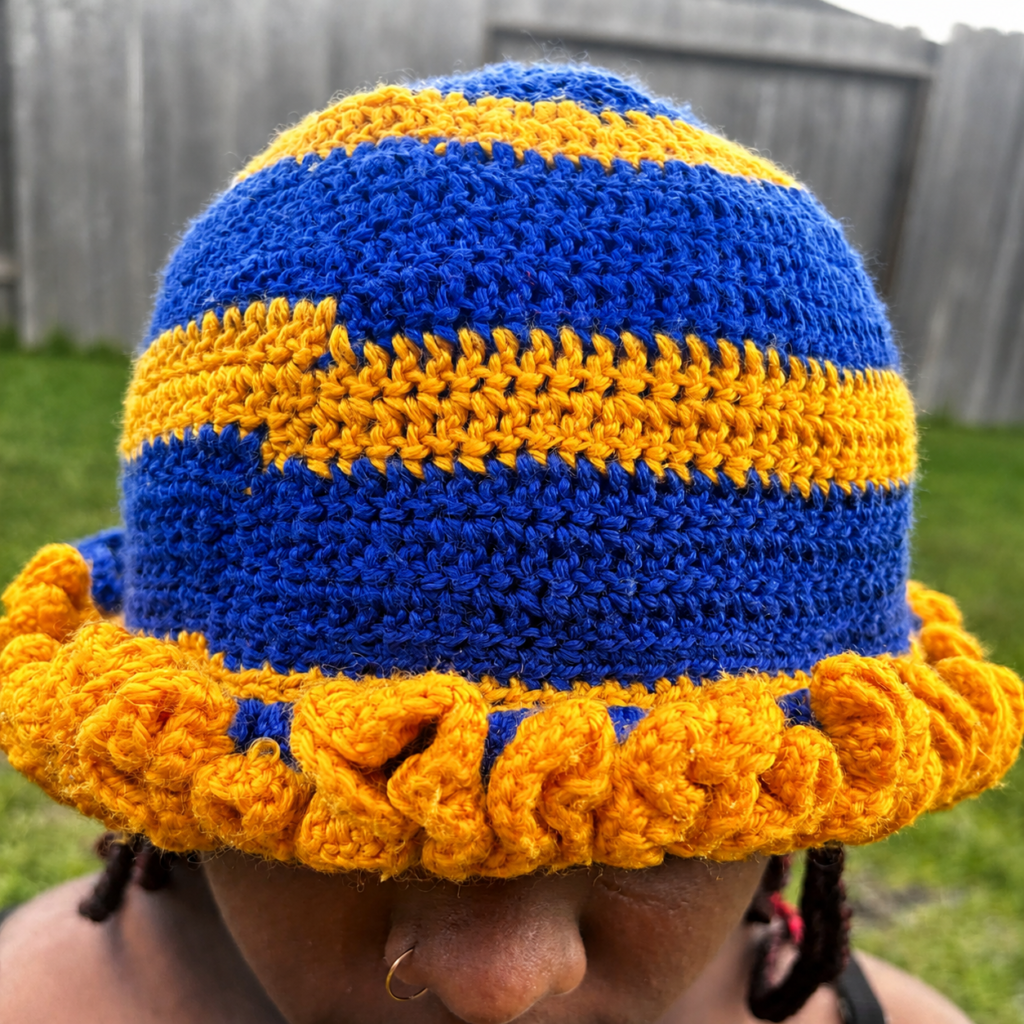
Royal blue and golden yellow.
Bright green with brown, cream and mustard.
Brown-and-cream granny-square work.
Red, gold, green and black.
Orange apparel.
Lavender bags.
Scrunchies in combinations that have nothing to do with the Jamaican flag.
That is important.
Red, gold, green and black carry real meaning, especially through Rastafari.
But Jamaican creativity is not restricted to one approved palette.
The Jamaican part is not a required color combination. It is the freedom to make the thing your own.
“Use what you have” does not mean settle for less
Resourcefulness sometimes gets romanticized in a way I do not like.
Using what you have does not mean poor quality is good enough.
It means seeing possibility.
A good maker can look at yarn and see something that does not exist yet.
Then the skill is in turning that possibility into a finished piece somebody else wants to wear or use.
That is craftsmanship.
Then somebody gives it a name
This might be one of my favorite Jamaican habits.
We name things.
Nicknames.
Recipes.
Drinks.
Plants.
Businesses.
Somebody makes coconut candy hard enough to challenge your teeth and suddenly it is Bust-A-Jaw.
Of course it is.
That personality is part of the culture.
Taylor’s Things does not sand that personality away in an attempt to make every listing sound identical.
Our professional presentation makes the craftsmanship easier to appreciate without making every piece look like it came from the same factory.
We standardize the information customers need—measurements, materials, care, shipping and clear photography—while preserving the personality that makes each piece different.
The information is standardized. The creativity is not.
Material honesty matters too
We know these pieces are made from crochet yarn.
We do not always have independently confirmed fiber composition for every one-of-one item.
So we do not guess.
Our disclosure can be as simple as:
Crochet yarn; exact fiber composition not confirmed.
There is no benefit in inventing “natural wool” or some other premium-sounding material when we cannot verify it.
The product is interesting enough without fictional ingredients.
The products carry more than yarn
I do not mean that in a mystical way.
I mean there is human work embedded in the object.
Time.
Decisions.
Skill.
Trial and error.
The maker’s eye.
That is what mass manufacturing cannot reproduce exactly.
And that is why I want Jamaican makers to have a bigger table.
Professional photography, accurate measurements, straightforward descriptions and a global storefront make it easier for somebody outside Jamaica to appreciate the work for what it is.
Not souvenir-shop decoration.
Not a stereotype.
A real product made by a real person.
Same Jamaican instinct. Different material.
The more Taylor’s Things grows, the more I see the same cultural pattern showing up in completely different categories.
Know what you have.
See the possibility.
Make something.
Put your personality into it.
Give it a name.
Share it.
With crochet, the journey starts with yarn.
Then a stitch.
Then another stitch.
Then a pattern begins to appear.
Eventually the yarn becomes an object that can travel much farther than the hands that made it.
Use what you have. Make something worth sharing.
Leave a Reply